Small batch injection molding
Small batch injection molding, yet a sharp unit price
A small batch is not a fixed number. It is a series where the mold still counts in the price, and that depends on your total volume over the years, not your first order.
The question behind the question
What is a small batch?
Small batch injection molding pays off once the mold is spread over enough units. The sweet spot at QDP is between 500 and 20,000 units per run, and smaller volumes are possible. The real answer to "is my batch too small" does not depend on this year, but on how many you make over the lifetime of your product.
Based on an analysis of QDP’s own production order history since 2016, segment small batches up to 2,000 units per year. Lifetime is the span between first and last production order; for ongoing products this is a lower bound.
Calculate it yourself
The effective unit price drops with every repeat order
The mold share per product is the mold price divided by your total quantity. Vary the quantity per order and how often production returns, and see where your batch lands.
Effective unit price for a small batch
The price is the mold cost spread over your total quantity, plus the variable unit price.
Assumptions: variable unit price about 0.90 euros for a small technical product, 3D print about 8 euros per unit. All amounts are indicative and serve as illustration, not as a quote. Our mold lower limit is 3,000 euros externally. For an exact price use the online calculator or request a quote.
The core
One-time or repeating, that is the real difference
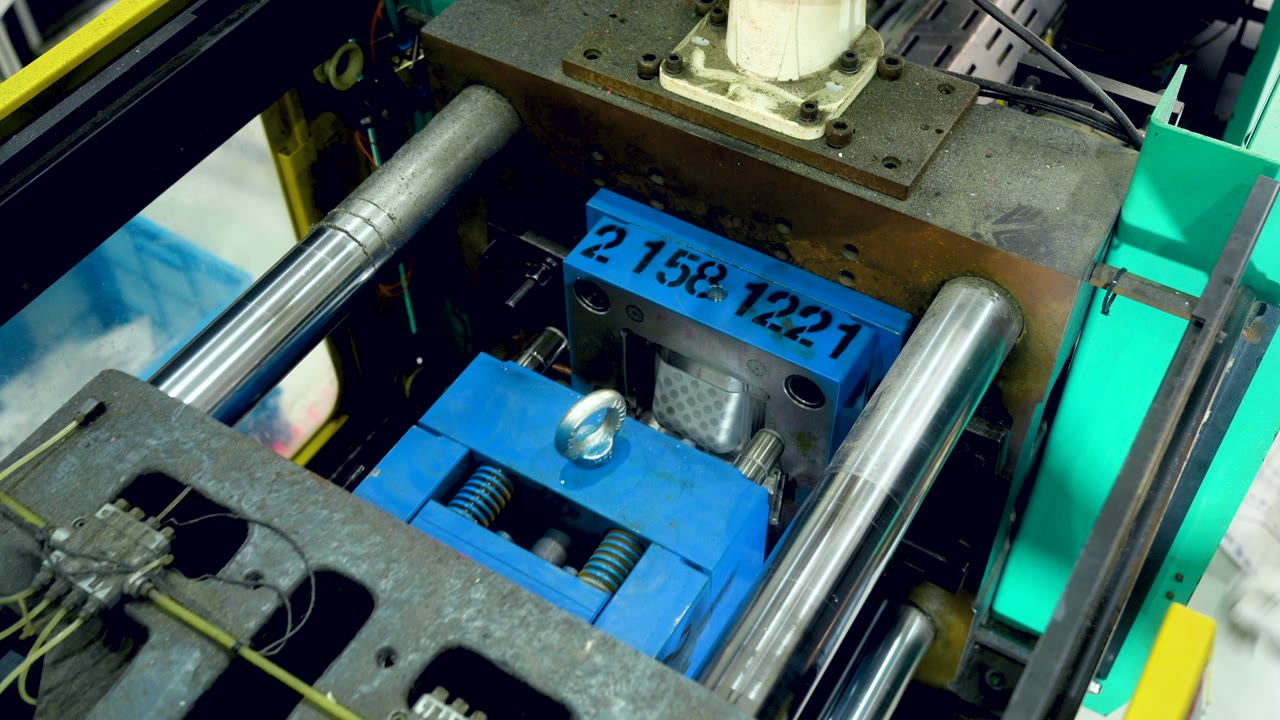
The mold is a one-time investment you use again and again. For a small batch, the mold is standard P20 steel, with which you usually make more than 100,000 units: many times more than a small batch ever needs. Every time you order again, that same mold is spread across more units and your effective price drops, with no new tool costs.
One-time batch, 500 units
per unit. The mold adds about 8 euros to each product. Often, injection molding then loses out to 3D printing or vacuum forming. For a true one-time batch, that is honest advice.
Repeating, about 3,800 units over 5 years
per unit. The same mold is spread over about 3,800 units, our median from real production data, and the mold share drops to about 1.05 euros. Every repeat order lowers the price, with no new tool costs.
What determines it
Four factors determine whether a small batch is worthwhile
- Total volume over the lifetime
The mold is depreciated over all units together, not per batch. Repeating beats one-time, always.
- Mold choice
For a small batch, the mold is standard P20 steel, with which you usually make more than 100,000 units. That is many times more than a small batch needs, so the mold’s lifetime is rarely the limiting factor. For larger quantities, harder steel types are available.
- Manufacturable design (DfM)
Shorter cycle time and less scrap push the variable unit price down, and that counts over the whole series.
- Alternative costs
The break-even point is the mold cost divided by the difference in unit price with 3D print or vacuum forming. The bigger that difference, the sooner injection molding wins.
Frequently asked questions
Small batch injection molding in short
What is a small batch in injection molding?+
A small batch is not a fixed quantity. It’s a series where the mold still noticeably counts in the unit price. The sweet spot at QDP is between 500 and 20,000 units per run, and even smaller batches are possible. As soon as your total volume increases over the years, a small batch automatically becomes like a regular batch.
Is injection molding profitable for a small batch?+
Yes, provided you include the total volume over the lifetime, not just the first order. QDP’s own production shows that a small batch lasts a median of five years and reaches about 3,800 units. Over that volume, the mold is broadly spread, and every repeat order lowers the effective unit price with no new tool costs.
From how many units is a mold worthwhile?+
The break-even point is the mold cost divided by the difference in unit price with an alternative like 3D printing. With a simpler mold, injection molding can be cheaper from just a few hundred units; if the unit price difference is bigger, the break-even point is even lower. So there is no fixed minimum—it depends on your mold and your alternative.
What does a mold for a small batch cost?+
A mold starts from 3,000 euros, with a sweet spot between 3,000 and 5,000 euros. For a small batch, we consider a simpler or aluminum mold to lower the entry. At QDP, the mold is your property, with a certificate of ownership, and the same mold can later scale up to larger quantities.
What is the difference between a one-time and a repeating batch?+
For a one-time batch, that single volume carries the entire mold investment, so the unit price remains high. For a repeating batch, the same mold is spread across all repeat orders together, so the effective unit price drops every year. A small batch that comes back for five years is, economically, a large batch in slow motion.