Skip to content

Injection molding / Injection molding materials / POM

Material

POM (Polyoxymethylene, Delrin): low friction and high wear resistance

POM is a strong, wear-resistant, and dimensionally stable plastic with a low coefficient of friction. Ideal for gears, bearings, and other moving parts.
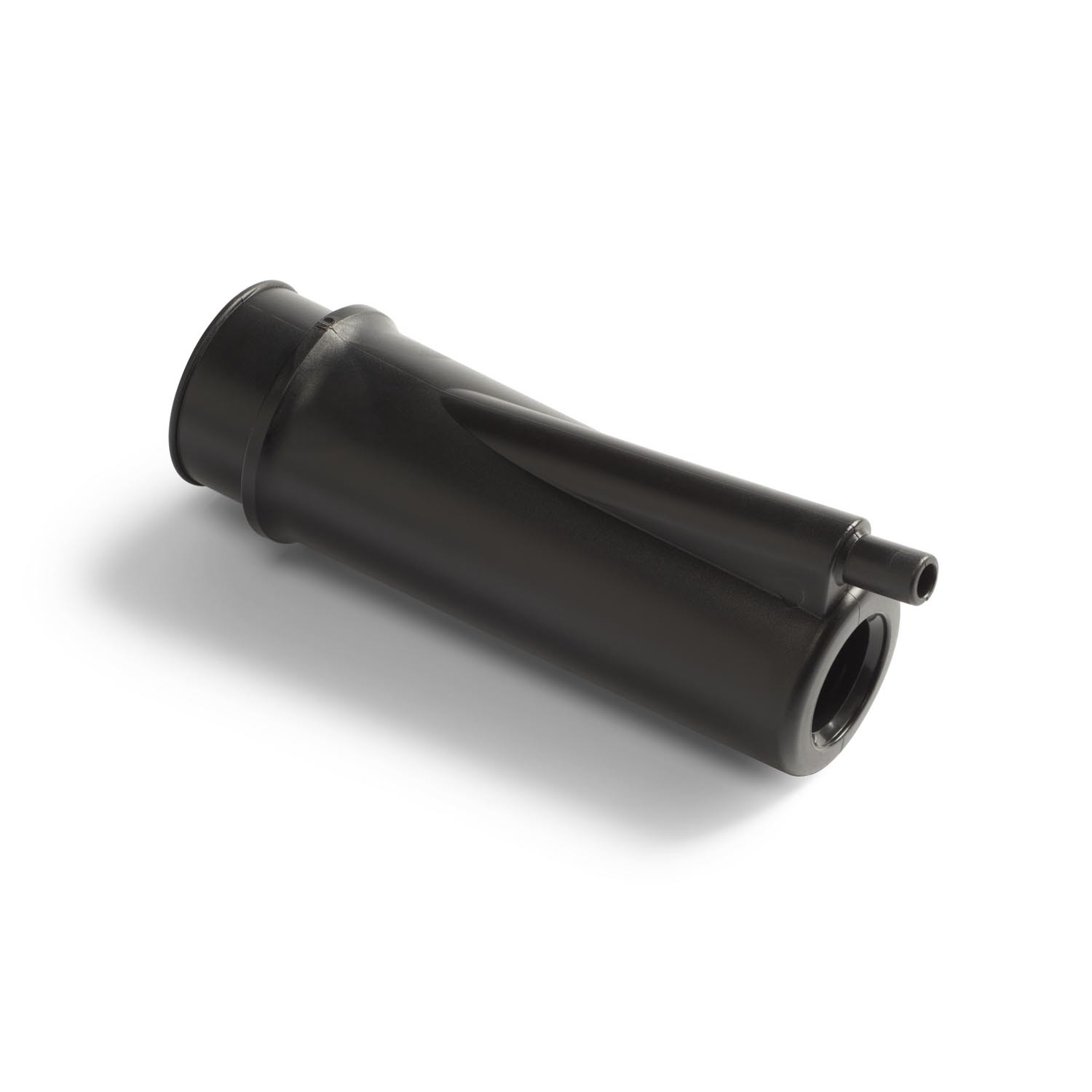
Example of an injection molded plastic part, QDP product photography

Key properties

  • High mechanical strength and stiffness, even under prolonged load.
  • Low coefficient of friction, ideal for moving parts.
  • Excellent wear resistance, withstands repeated movement.
  • High dimensional stability, minimal moisture absorption and low thermal expansion.
  • Excellent fatigue resistance for parts under long-term load.

Mechanical properties (indicative values)

PropertyValue
Density1.41 g/cm³
Tensile strength60–70 MPa
E-modulus (tensile)2800–3100 MPa
Elongation at break25-40%
HDT @1.8 MPa100–110 °C
Shrinkage1,8-2,5%
Processing temperature190–210 °C

Indicative values for standard, unfilled grades. For a final material selection, always consult the supplier's datasheet (TDS) of the specific grade.

Applications

  • Automotive: fuel systems and clutch components
  • Industry: gears, bearings, and conveyor rollers
  • Electronics: insulating components and connectors
  • Medical technology: precision parts

Why choose POM?

POM is the standard choice for moving, mechanically loaded parts where low friction and dimensional stability make the difference.

See the full materials overview or the DfM-pillar.

Frequently asked questions about POM

What is POM?

POM, also known as acetal or polyacetal, is the plastic for moving parts. It is hard, stiff, and dimensionally stable, with a smooth surface and low friction against steel and against itself. This allows it to run smoothly without lubrication and wear slowly. It absorbs virtually no moisture, which keeps dimensions stable. QDP chooses POM for gears, sliding parts, and hinged components.

Why is POM so suitable for gears and sliding parts?

Because of the combination of three properties. The coefficient of friction is low, so parts move smoothly over each other without grease. The material is wear-resistant, so that smoothness lasts for years. And it is dimensionally stable because it hardly absorbs moisture, so the tooth shape stays as it was. Few other plastics have all three at once, and certainly not in this price range. QDP therefore uses POM as standard for moving parts.

How much does POM shrink?

A lot: approximately 1.8 to 2.5 percent, together with PP and HDPE the highest among common materials. Moreover, it continues to shrink afterward, so the size continues to change for the first days after production. For a gear with a tight fit, this is decisive because the mold must be built to exactly the right final size. That's why you measure at a fixed moment after molding. QDP documents this measurement moment in the quality agreement.

Can you glue, paint, or print on POM?

Hardly at all, and that's the price of the smooth surface that makes the material so suitable for moving parts. Glue and paint hardly adhere to it without aggressive pretreatment. In practice, connections are therefore made by snapping, screwing, or clamping, and text is placed in the mold instead of printing on it. QDP incorporates the connection and the marking into the part.

Is POM resistant to chemicals?

To most, yes. Oils, greases, fuels, alcohols and the usual solvents do not affect it, making it suitable for machine parts and parts in an oil bath. The exceptions are strong acids and prolonged exposure to chlorinated water, which affect the material. For swimming pool and dosing applications, this requires extra attention, especially for long-term contact. QDP checks the usage environment before fixing the material selection.

What is POM used for?

For the moving interior of products: gears, bearing bushes, sliding blocks, rollers, hinges, spring parts, dosing mechanisms and closures. It is also commonly found in pumps, valves and measuring equipment. Wherever a part must move smoothly and for years without lubrication, this is the starting point. Often it is out of sight in the product, exactly where the movement happens. QDP injection molds POM among others for dosing and moving parts.

What does this mean for your design?

Calculate your mold and unit price in 2 minutes, or ask our engineers for a DfM check.

500+ manufacturing companies in the Netherlands, Belgium and Germany chose QDP

PhilipsAkzoNobelVan RaamMobilaneVan GelovenDeVi-GroupGIZMO DesignWaste VisionPure ValueHoeflakeSenza TeaPin-LockSparqDamtechProtee UnitedLayherHulshof
Calculate your price