Skip to content

Injection molding / Injection molding materials / PC/ABS

Material

PC/ABS (Polycarbonate/ABS): strong, heat resistant and impact resistant

PC/ABS combines the impact resistance and workability of ABS with the heat resistance and strength of polycarbonate: a versatile and durable material for electronic housings and automotive applications.
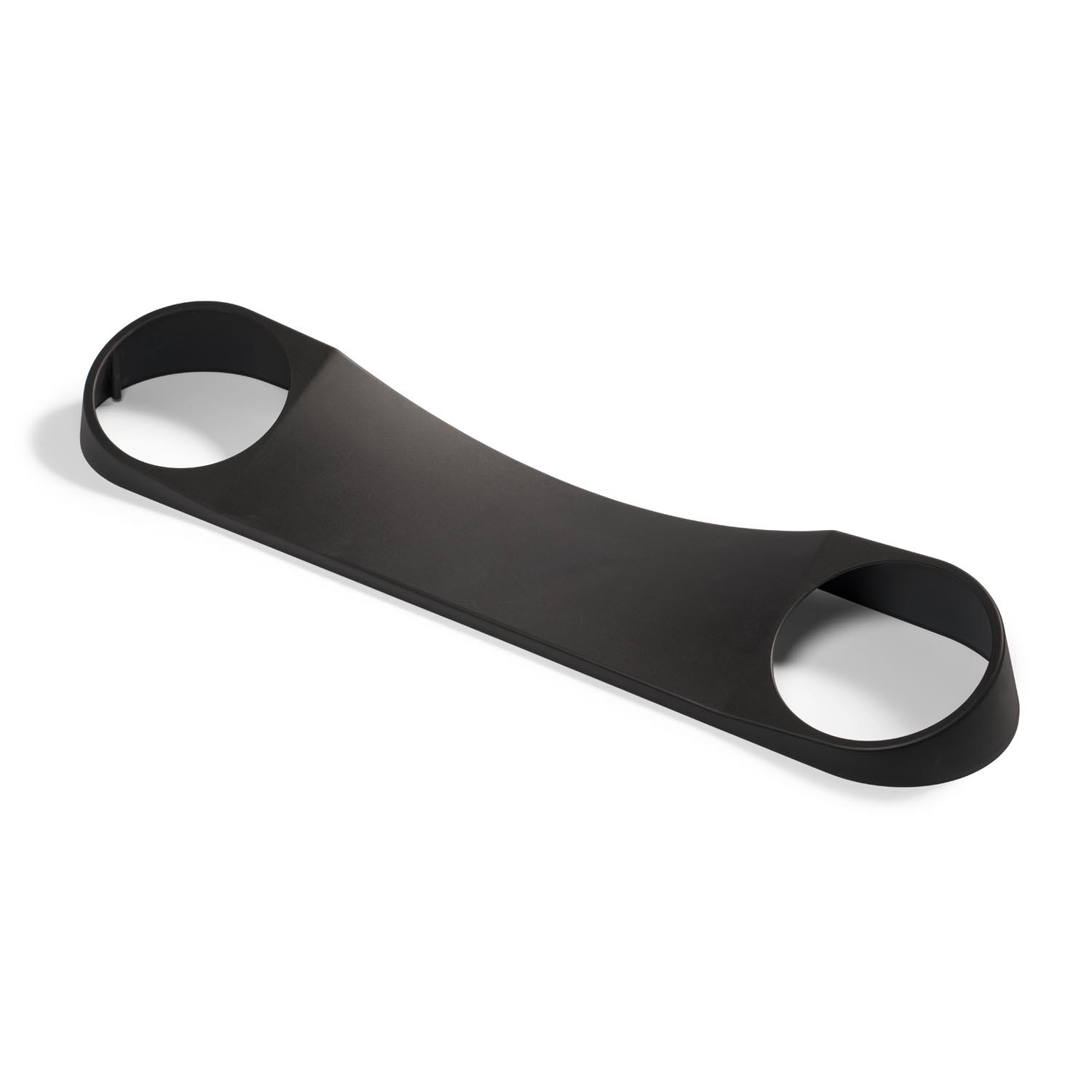
Example of an injection molded plastic part, QDP product photography

Main properties

  • High impact resistance, even at low temperatures.
  • Good thermal stability, resistant to high temperatures.
  • Excellent workability for complex designs.
  • Good chemical resistance to oils, greases and solvents.
  • Flame-retardant variants available for demanding applications.

Mechanical properties (indicative values)

PropertyValue
Density1.10-1.15 g/cm³
Tensile strength50-60 MPa
E-modulus (tensile)2300-2600 MPa
Elongation at break50-120%
HDT @1.8 MPa110-125 °C
Shrinkage0,5-0,8%
Processing temperature250-280 °C

Indicative values for standard, unfilled grades. For a final material selection, always consult the supplier's datasheet (TDS) of the specific grade.

Applications

  • Automotive: dashboard components and structural parts
  • Consumer electronics: laptop and phone housings
  • Industry: mechanical housings and tool parts
  • Medical technology: equipment housings

Why choose PC/ABS?

PC/ABS is the preferred choice when a housing must be both impact resistant and heat resistant, without the cost of pure polycarbonate. Also available in recycled variants, see the sustainable materials in our materials overview.

See the full materials overview or the DfM-pillar.

Frequently asked questions about PC/ABS

What is PC/ABS?

PC/ABS is a mixture of polycarbonate and ABS, in which you combine the strengths of both. It is more impact resistant and heat resistant than ABS alone, with a heat deflection temperature of 110 to 125 degrees versus 75 to 90 for ABS, and it is easier to process and finish than pure polycarbonate. That makes it the workhorse for housings with electronics inside. QDP recommends it as standard for such products.

When should you choose PC/ABS instead of ABS or PC?

Choose ABS if the requirements are moderate and the product remains indoors, as that is the cheapest. Choose PC/ABS as soon as there is heat in the product, for example from electronics or a power supply, or if it must survive a drop. Only choose pure PC if transparency is needed or the very highest impact resistance. The difference in material price is small compared to the cost of a product that deforms. QDP makes that consideration in the design phase.

Is PC/ABS suitable for outdoors?

Not as standard. Just like ABS and PC it yellows in the sun and gradually loses impact resistance, unless a UV stabilizer is present. For a product that is outside occasionally, a stabilized grade is sufficient; for something permanently outdoors, ASA is generally the better choice. Black versions last longer than light ones, because carbon black itself acts as a UV filter. QDP determines this based on the actual location of the product.

Is PC/ABS allowed for food contact?

Not for new products in the European Union. The polycarbonate part is made with bisphenol A, and since January 20, 2025 that is banned in materials that come into contact with food. For all other applications nothing changes. If it is a product that touches food or drink, another material is used, such as PP or a suitable ABS grade. QDP checks this before the selection is finalized.

What is PC/ABS used for?

For housings that get warm or have to withstand abuse: cases and enclosures for electronics, measuring and control equipment, chargers and power supplies, interior parts in vehicles, and hand tools. It combines a clean surface with enough strength to survive a drop. If there is no heat and no risk of dropping in the product, regular ABS is cheaper and just as good. QDP injection molds PC/ABS among others for device housings containing electronics.

What does this mean for your design?

Calculate your mold and unit price in 2 minutes, or ask our engineers for a DfM check.

500+ manufacturing companies in the Netherlands, Belgium and Germany chose QDP

PhilipsAkzoNobelVan RaamMobilaneVan GelovenDeVi-GroupGIZMO DesignWaste VisionPure ValueHoeflakeSenza TeaPin-LockSparqDamtechProtee UnitedLayherHulshof
Calculate your price