Skip to content

Injection molding / Injection molding materials / PC

Material

PC (Polycarbonate): impact-resistant, heat-resistant, transparent and opaque

Polycarbonate is an extremely strong plastic, available in transparent, semi-transparent, and opaque variants. Excellent impact resistance and heat resistance, used in safety glasses, machine guards, and electrical components.
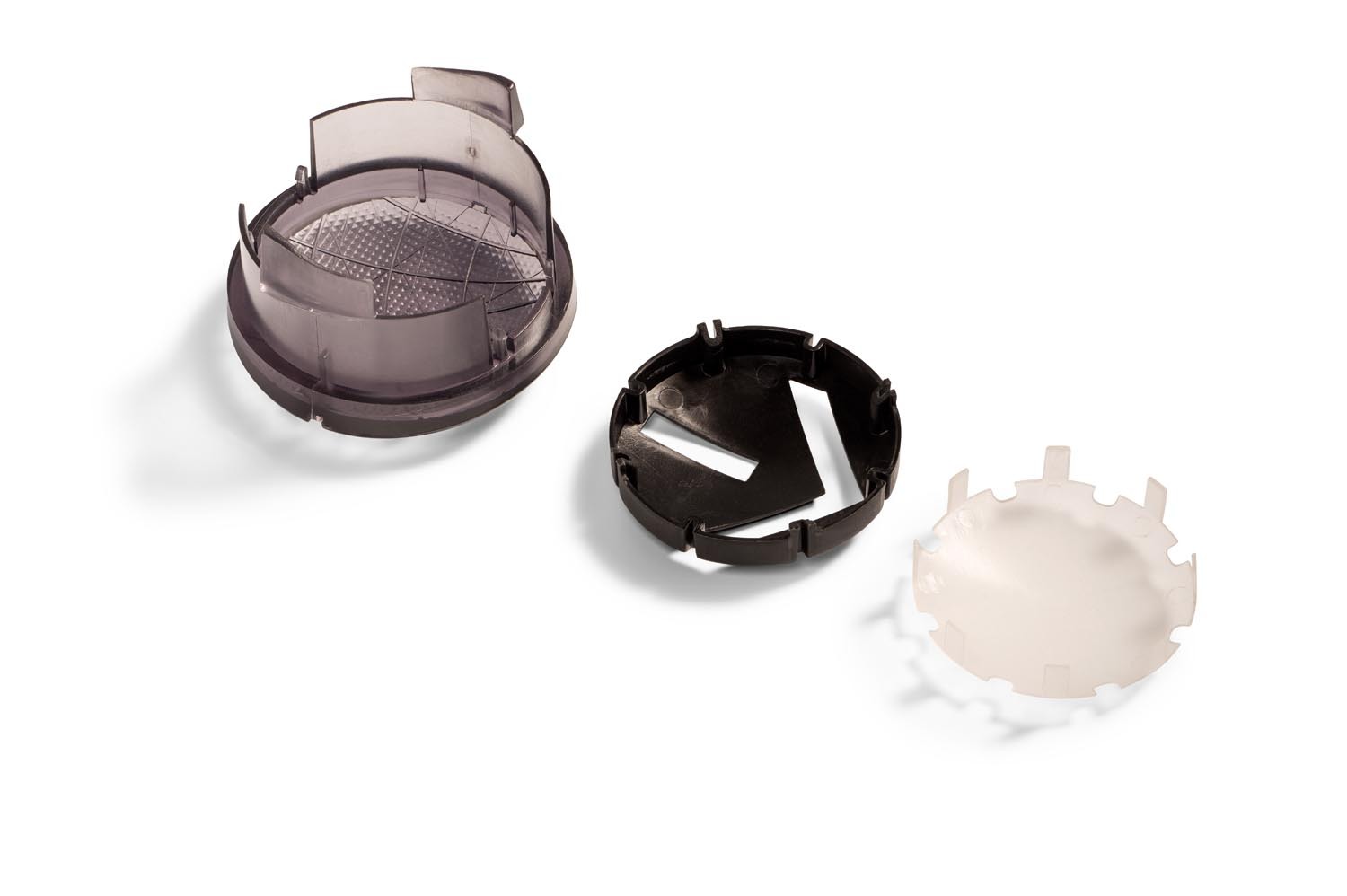
Example of an injection molded plastic part, QDP product photography

Main properties

  • Exceptional impact resistance: up to 250 times stronger than glass of the same thickness.
  • Optical clarity with high light transmission, virtually transparent.
  • High temperature resistance, from -40 to 120 degrees Celsius.
  • Good electrical insulation.
  • Chemical resistance to many oils, greases, and acids.

Mechanical properties (indicative values)

PropertyValue
Density1.20 g/cm³
Tensile strength60-70 MPa
E-modulus (tensile)2300-2400 MPa
Elongation at break100-120%
HDT @1.8 MPa125-135 °C
Shrinkage0,5-0,7%
Processing temperature280-320 °C

Indicative values for standard, unfilled grades. For a final material selection, always consult the supplier’s datasheet (TDS) of the specific grade.

Applications

  • Automotive: headlights, dashboards and interior components
  • Electronics: housings for laptops and smartphones
  • Medical sector: equipment and instruments for sterilization
  • Construction sector: skylights and safety glazing

Why choose PC?

PC is the choice when transparency and impact resistance need to be combined, and is also recyclable.

View the complete materials overview or the DfM-pillar.

Frequently asked questions about PC

What is polycarbonate (PC)?

Polycarbonate is one of the most impact-resistant plastics available, and at the same time can be made glass-clear. It withstands temperatures well above 120 degrees and remains tough even when frozen. You’ll find it in safety glasses, machine covers, lamp covers, and protective screens. The weak point is the surface, which is sensitive to scratches and some solvents. QDP uses PC where transparency or impact resistance is decisive.

Is polycarbonate scratch-resistant?

No, and that is its best-known weakness. The material is particularly impact-resistant but the surface is relatively soft, so it scratches easily. For applications where this is an issue, there are coatings that greatly improve scratch resistance, but that is an extra process and therefore an extra cost. PC also does not tolerate every cleaning agent: some solvents cause hairline cracks under stress. QDP reports this in advance whenever cleaning is part of the usage.

Is polycarbonate UV-resistant?

Not by itself. Uncoated PC yellows and slowly loses impact resistance in sunlight. There are grades with UV stabilization and versions with a protective coating, which will last for years outdoors. For a product that is permanently outdoors that choice is crucial, not a detail. If transparency is not required, ASA is often the simpler route. QDP weighs those two against each other for outdoor applications.

Why must PC be dried before injection molding?

Polycarbonate absorbs moisture, and moisture at high temperature breaks down molecular chains. If you mold undried material, there will be streaks and bubbles in the product and impact resistance will clearly decrease, even if the part looks fine. Drying is therefore not just an extra precaution but a requirement. QDP specifies the drying time and drying temperature in the production instruction of the item.

Is polycarbonate still allowed for food contact?

Not for new products in the European Union anymore. Since January 20, 2025, bisphenol A in materials that come in contact with food is prohibited, and polycarbonate is made with it. This also applies to PC/ABS. For applications without food contact nothing changes. If the product does come in contact with food or drink, you should choose another material. QDP checks this before the material selection is finalized.

What is polycarbonate used for?

For parts where transparency, impact resistance or heat come together: safety glasses and protective covers, machine guards, lamp covers and light-transmitting parts, housings of electrical equipment, and optical parts. It is also commonly used in medical technology because it can be sterilized. What you do not use it for are parts that endure frequent abrasion or are exposed to aggressive cleaners, as the surface is too sensitive for that. QDP injection molds PC among others for transparent covers and protective parts.

What does this mean for your design?

Calculate your mold and unit price in 2 minutes, or ask our engineers for a DfM check.

500+ manufacturing companies in the Netherlands, Belgium and Germany chose QDP

PhilipsAkzoNobelVan RaamMobilaneVan GelovenDeVi-GroupGIZMO DesignWaste VisionPure ValueHoeflakeSenza TeaPin-LockSparqDamtechProtee UnitedLayherHulshof
Calculate your price