Skip to content

Injection molding / Injection molding materials / HDPE

Material

HDPE (High-Density Polyethylene): chemically resistant and lightweight

HDPE is known for its high chemical resistance, low moisture absorption, and impact strength. A popular choice for packaging, piping, and industrial applications.
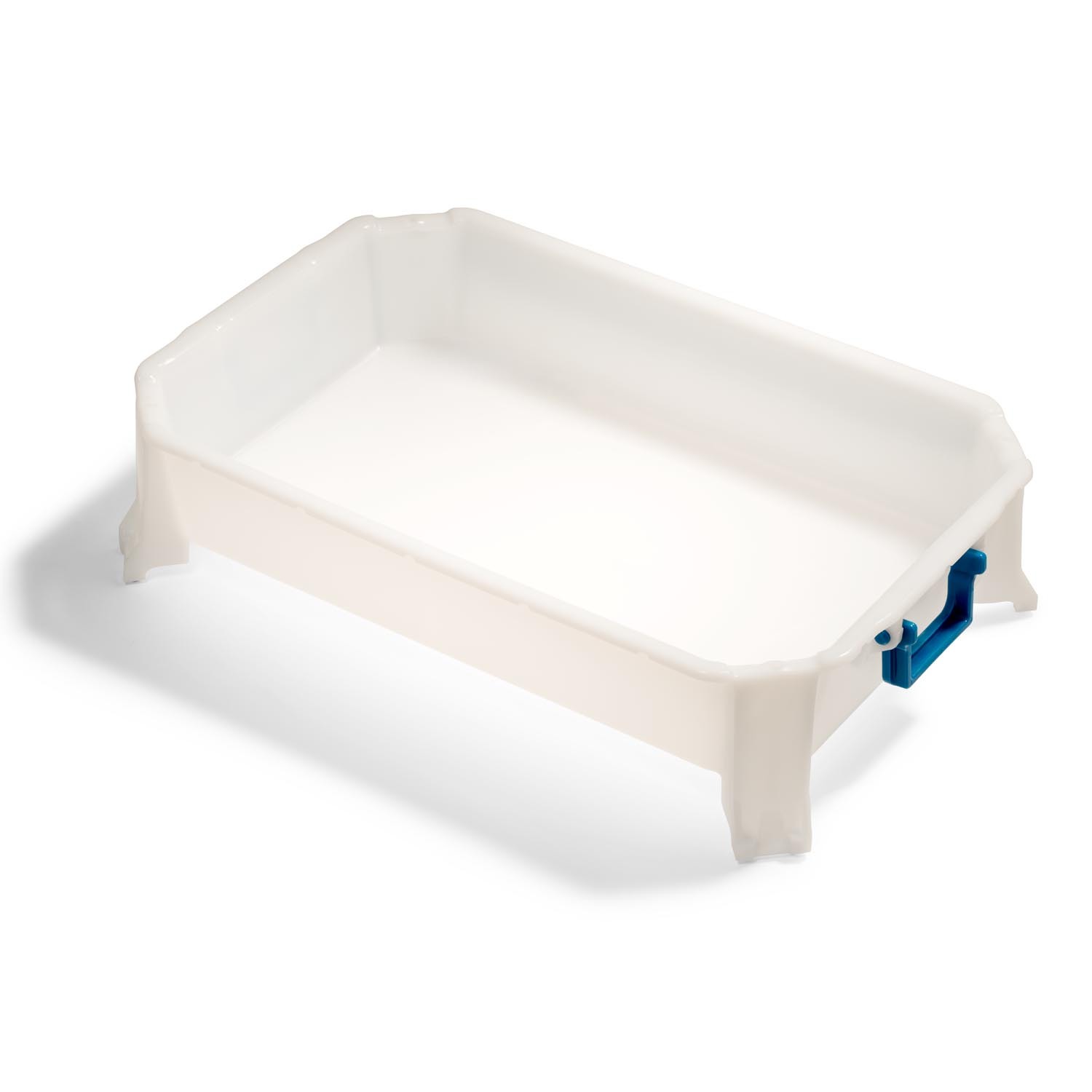
Example of an injection molded plastic part, QDP product photography

Key properties

  • High density and strength, resistant to wear and impact.
  • Chemical resistance to acids, bases, oils and solvents.
  • Lightweight, contributing to efficient transport.
  • Good processability via injection molding, extrusion and blow molding.
  • Odorless and tasteless, suitable for direct food contact.

Mechanical properties (indicative values)

PropertyValue
Density0.94-0.96 g/cm³
Tensile strength22-30 MPa
E-modulus (tensile)1000-1400 MPa
Elongation at break>500%
HDT @1.8 MPa45-50 °C
Shrinkage1,5-3,0%
Processing temperature200-240 °C

Indicative values for standard, unfilled grades. For a final material choice, always consult the supplier’s datasheet (TDS) of the specific grade.

Applications

  • Packaging industry: bottles, containers and crates
  • Construction sector: pipes and tubes
  • Consumer goods: toys and sports equipment
  • Medical sector: equipment and packaging

Why choose HDPE?

HDPE combines strength, chemical resistance and a low price, and is also highly recyclable.

View the complete materials overview or the DfM-pillar.

Frequently asked questions about HDPE

What is HDPE?

HDPE stands for high-density polyethylene, the rigid and strong variant of polyethylene. It is lightweight, virtually insensitive to moisture and resistant to acids, alkalis, oils and most solvents. You will find it in crates, jerry cans, pipes and household items. The material stays tough well below zero, where many other plastics become brittle. QDP chooses HDPE for parts that must resist chemicals or frost.

What is the difference between HDPE and PP?

They are similar and in the same price range. HDPE is tougher at low temperatures and remains impact resistant even with frost, PP is stiffer and withstands higher temperatures. HDPE also shrinks more, up to 3 percent, which makes dimensional stability more difficult. For a crate that sits outside in winter, you choose HDPE; for a stiff part that gets warm, PP. QDP chooses based on the actual load, not habit.

What is HDPE used for in injection molding?

Mainly for functional, robust parts: crates and containers, caps and closures, fittings and pipe parts, components for agriculture and construction, and packaging that must withstand aggressive contents. The surface is matte and waxy, so it is not a material for visible parts with a high-gloss finish. Where strength, chemical resistance and price count, HDPE stands out. QDP assesses during design if it is the right choice.

Is HDPE food-safe?

HDPE is odorless and tasteless and contains no plasticizers, which is why it is widely used in food packaging and kitchenware. Food-grade, however, is not a property of the plastic itself but of the specific grade, including pigment and additives, with a declaration of conformity according to the European regulation. Always request this certificate with the chosen material. QDP arranges this declaration per project as soon as food contact is required.

Can you glue or weld HDPE?

Gluing works poorly, just as with PP, because of the low surface energy: without pre-treatment, almost no glue will adhere. Welding, on the other hand, works excellently and is the usual route for HDPE constructions. For an injection-molded product, a snap or screw connection is usually the simplest solution, as it is included in the mold and requires no extra step. QDP makes that choice during the design, not afterward.

How much does HDPE shrink?

HDPE shrinks around 1.5 to 3 percent, the highest among the commonly used injection molding plastics. This requires consistent wall thickness, wider tolerances and attention to warping in large surfaces. The mold is built for that shrinkage, so the material is fixed as soon as the steel is there and changing it later means a new mold. QDP calculates the shrinkage per product in the mold dimension.

What does this mean for your design?

Calculate your mold and unit price in 2 minutes, or ask our engineers for a DfM check.

500+ manufacturing companies in the Netherlands, Belgium and Germany chose QDP

PhilipsAkzoNobelVan RaamMobilaneVan GelovenDeVi-GroupGIZMO DesignWaste VisionPure ValueHoeflakeSenza TeaPin-LockSparqDamtechProtee UnitedLayherHulshof
Calculate your price