
Sustainability at QDP · Demonstrable, not claimed
Produce more sustainably, without compromising quality or cost
Biobased, recycled or produced energy-efficiently. We choose the route that fits your product, with certificates as proof.
QDP (Duiven, 1998) is a sustainable molding company: we develop and produce plastic products and make sustainable molding practically achievable via three routes: biobased and biodegradable materials, recycled content, and energy-efficient production.
Plastic and sustainability are often set against each other. That's unjustified. Plastic is light, strong, and durable, and those very characteristics make products more efficient in transport and use. The real gain is not in renouncing the material, but in making smarter choices: the right material, a product that can be recycled at the end of its life, and as little energy as possible per unit.
We do not see sustainability as a separate service or as a sticker on the packaging. It’s a choice we include from the very first sketch, along with manufacturability and cost. And we substantiate it: with certificates, datasheets, and results from our own production, not with pretty words.
Two material routes
Biobased or recycled, depending on your goal
Ask a client for a more sustainable product, and one means compostable and the other a lower footprint. That’s why we first ask what exactly you want to achieve. From there, two concrete routes unfold, each with its own materials, suppliers, and verifiable data.
Biobased and biodegradable
Material from renewable sources, which under the right conditions breaks down again. A strong story to the end user, provided the application permits.
- PHA and PLA via Bluepha, with PHA biodegradable in sea, soil, and compost
- Biopolymer compounds with natural fibers via nature2need
- TÜV- and EFSA-certified grades, no vague claims
Recycled content
Technical plastic with recycled raw material, which can meet mechanical requirements. Often closer to a regular price point than biobased.
- PC/ABS from the REZYcom line by Polykemi, with good impact resistance
- Balance between strength, thermal stability, and chemical resistance
- Recycled PC for specific applications in research
More about materials and their properties can be found in our materials library. In doubt about the right material? We'll brainstorm with you.
Clearly stated
Four types of plastic, two questions
Each plastic answers two separate questions: is the raw material from renewable or fossil sources, and does it break down at the end or not. These two are unrelated. That’s why biobased isn’t automatically compostable.
Renewable raw material that also breaks down. The strongest sustainability story, provided the application allows for the material properties.
Derived from petroleum, but still biodegradable. Useful where biodegradability is needed but biobased isn't feasible.
Renewable source, but not biodegradable. Is, however, very recyclable, so suited for a circular route.
The classic plastics. Sustainable benefit here comes through recycled content and a recyclable design.
Energy-efficient production
20 to 80 percent less energy per unit
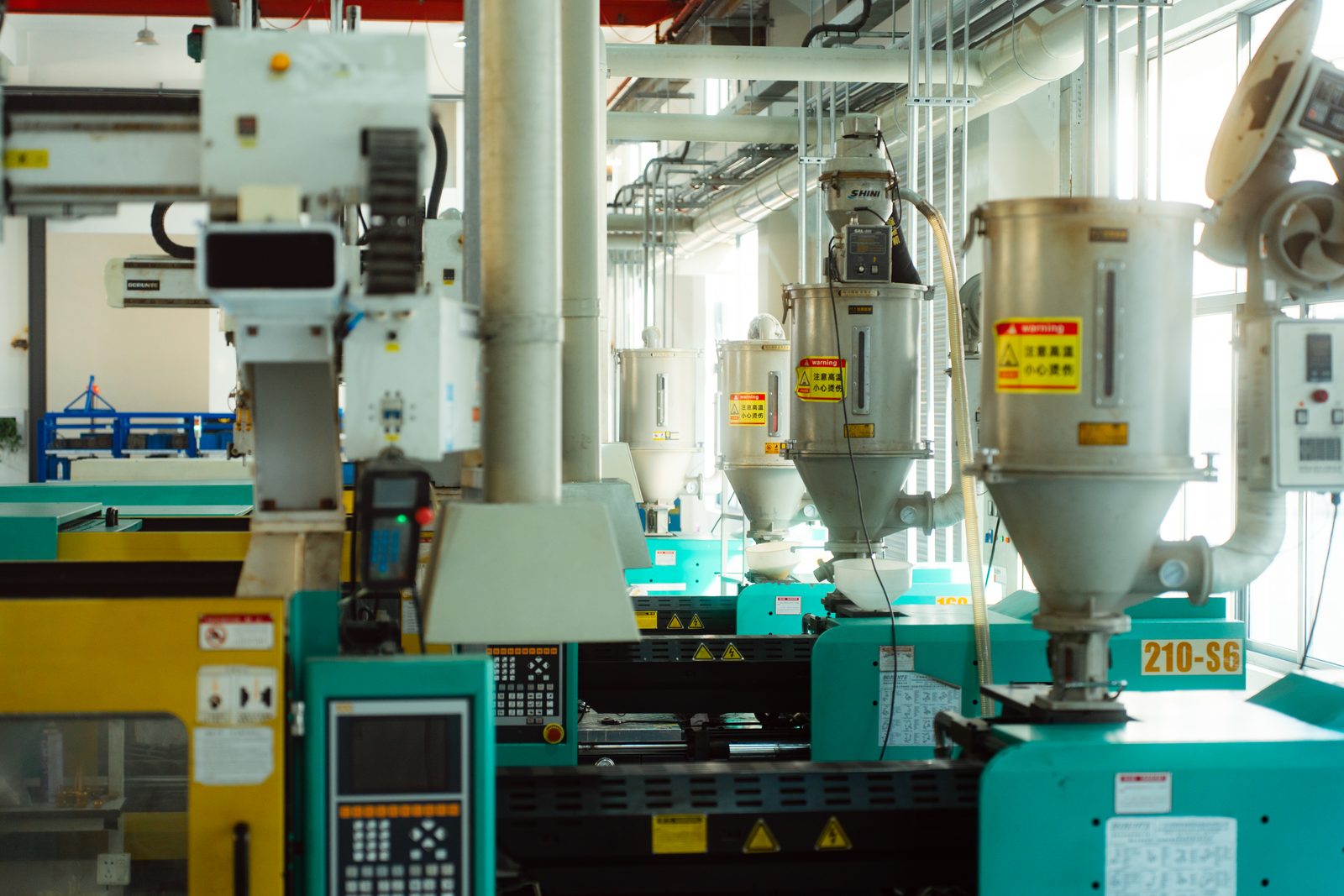
Material choice is only half the story. The other half is how you produce. Our own factory runs entirely on modern, electrically driven molding machines which use 20 to 80 percent less energy than traditional hydraulic machines.
Less energy per unit means two things at once: a lower CO2 footprint and a lower cost. Here, sustainability and price go hand in hand, instead of conflicting.
- /Designed for recyclability: single material where possible, detachable assemblies, and proper material coding, so that a product is sorted correctly at the end.
- /The marking that suits the material: a recycle code on recyclable plastics, and a compost or biodegradability label (such as TÜV OK Compost) on biobased biodegradable materials. A compostable product like PHA deliberately does not receive a recycle logo.
- /Waste reduction in the process, down to packaging and logistics.
Demonstrable, not claimed
Sustainability you can verify
Greenwashing is lurking once sustainability becomes a sales argument. We stick to what can be checked: certifications, supplier datasheets, and results from our own production.
Certified quality management, audited by an external party.
Our factory audited for labor, health, environment, and ethics.
Member of the industry association for the Dutch manufacturing industry.
The PHA grades come with verifiable certification for biodegradability and food safety.
The honest story
What we tell you upfront
Sustainably producing involves making choices, and we don’t hide those. Biobased material is technically strong, but usually more expensive than standard plastics. The material price is more often the threshold than the technology. Compostable sounds good, but only works if both the application and the waste stream are really set up for it.
That’s why we calculate costs early and put the sustainable option next to a standard one. Sometimes recycled content is the smartest choice, sometimes the greatest benefit is in using less material, a longer lifespan, or a lower footprint in production. What fits depends on your product and your market. We prefer to have that honest conversation at the start, instead of afterwards.
In production, not just in theory
Where it already works
Biobased PHA, in series
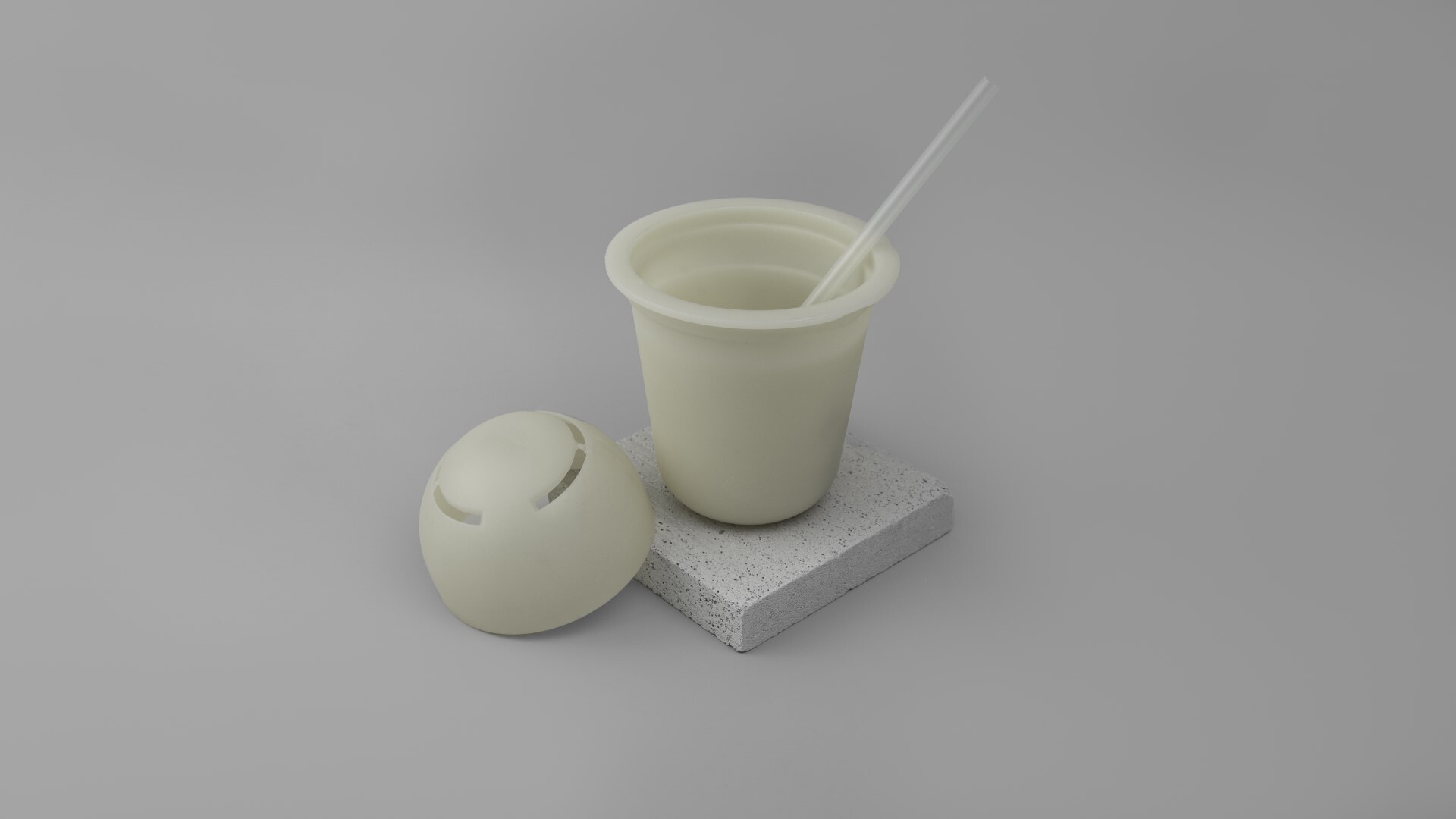
We injection mold the WAVZ Scoop Spoon in Bluepha BP330-05, a biobased and biodegradable PHA. Proof that a biodegradable material can also be processed in series and not just on the lab table.
Proteus Smart Display, Pure Value
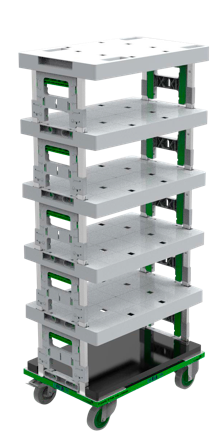
With the Proteus Smart Display, we avoided 85 percent cardboard waste. An example of how an innovative product and a sustainable approach can reinforce rather than exclude each other. See the case →
What customers say about the collaboration
"They think along with you on everything and know how to bring ideas into reality . A very reliable partner that thinks in solutions."Read the case study
 Gijs Raaijmakers
GIZMO Design, iF Design Award 2025
Gijs Raaijmakers
GIZMO Design, iF Design Award 2025
"We wanted covers that are stronger, quieter, and more luxurious without the unit price increasing. QDP solved that with one universal injection molded enclosure."Read the case study
 Dennis Vroegindeweij
Owner DeVi-Group
Dennis Vroegindeweij
Owner DeVi-Group
"QDP is one of the few suppliers who can say 'yes' to these dimensions. The lines are very short, which is convenient."Read the case study
 Carmen Smink
Van Geloven (McCain)
Carmen Smink
Van Geloven (McCain)
Frequently asked questions about sustainable plastic
What is sustainable molding?+
Sustainable molding means making plastic products in series with a lower environmental impact, by combining three choices: a more sustainable material (biobased such as PHA and PLA, or recycled such as PC and ABS), energy-efficient production, and a design that minimizes material, weight, and waste. As a sustainable molder, QDP chooses the route that suits each product technically and financially and substantiates it with certificates.
Can plastic and sustainability go together?+
Yes. Plastic has a high strength-to-weight ratio, lasts a long time, and is easily recyclable if incorporated into the design. It becomes more sustainable in three ways: biobased and biodegradable materials, recycled content, and energy-efficient production. The gain is in the right material choice, a product designed for recycling, and as little energy per unit as possible. QDP chooses the fitting route per product and substantiates it with certificates.
What is the difference between biobased and biodegradable?+
Biobased refers to the raw material: the material comes from renewable sources like corn or sugar cane instead of petroleum. Biodegradable refers to end-of-life: the material decomposes under certain conditions. The two are independent. There are biobased plastics that do not break down, and petroleum-based plastics that do break down. PHA via Bluepha, which QDP uses, is both: biobased and biodegradable in sea, soil, and compost.
Which sustainable materials can you mold?+
For a more sustainable end product, there are two routes. Biobased and biodegradable: PHA and PLA via Bluepha, and biopolymer compounds with natural fibers via nature2need. Recycled content: PC/ABS with recycled raw material from the REZYcom line from Polykemi. Each material has its own characteristics and price point. QDP checks per application whether it is technically and financially feasible, with the supplier’s datasheets and certificates.
Is a more sustainable material more expensive?+
Usually yes, and we prefer to say so frankly up front. With biobased materials, the material price is usually the true barrier, not the technology. Recycled content is sometimes actually closer to regular prices. That’s why we calculate the material costs early and line them up next to a standard material, so you can make an informed choice instead of having an expensive surprise later. This way you keep both sustainability and price in hand.
How do you make a molded product recyclable?+
Recycling starts in the design. Choose a single material wherever possible instead of non-separable combinations, keep connections detachable, and avoid glued or overmolded metals wherever possible. Place the right material coding and the recycle logo in the product, so it’s sorted correctly at end-of-life. Watch the difference per material: this applies to recyclable plastic, while a compostable biomaterial like PHA must not have a recycle logo but gets a compost mark. QDP takes this into account from the very first sketch.
How much energy does energy-efficient molding save?+
Modern, electrically powered molding machines use 20 to 80 percent less energy than traditional hydraulic machines, depending on the product and cycle. Less energy per unit means a lower CO2 footprint and a lower cost price. QDP produces in its own factory entirely on such energy-efficient machines, making the sustainability gain structural instead of incidental.
How does QDP demonstrate sustainability?+
With certificates and datasheets, not marketing claims. QDP is ISO 9001:2015 certified, its own factory in China is SMETA 4-Pillars certified for labor, health, environment, and ethics, and QDP is a member of the Koninklijke Metaalunie. The sustainable materials come with verifiable data, such as TÜV and EFSA certification for the PHA grades. And the marking matches the material: recyclable plastic gets a recycle code, biobased biodegradable materials like PHA get a compost or biodegradability mark instead of a recycle logo.
How do I start a more sustainable product with QDP?+
First, calculate your mold and unit price with the online calculator, or schedule a free brainstorm with Maick Klaassen. In that conversation, tell us what you understand by sustainable: biobased, compostable, recycled, or a lower footprint. Based on that we decide together on the route that fits technically and financially, and back it up with datasheets and certificates.